
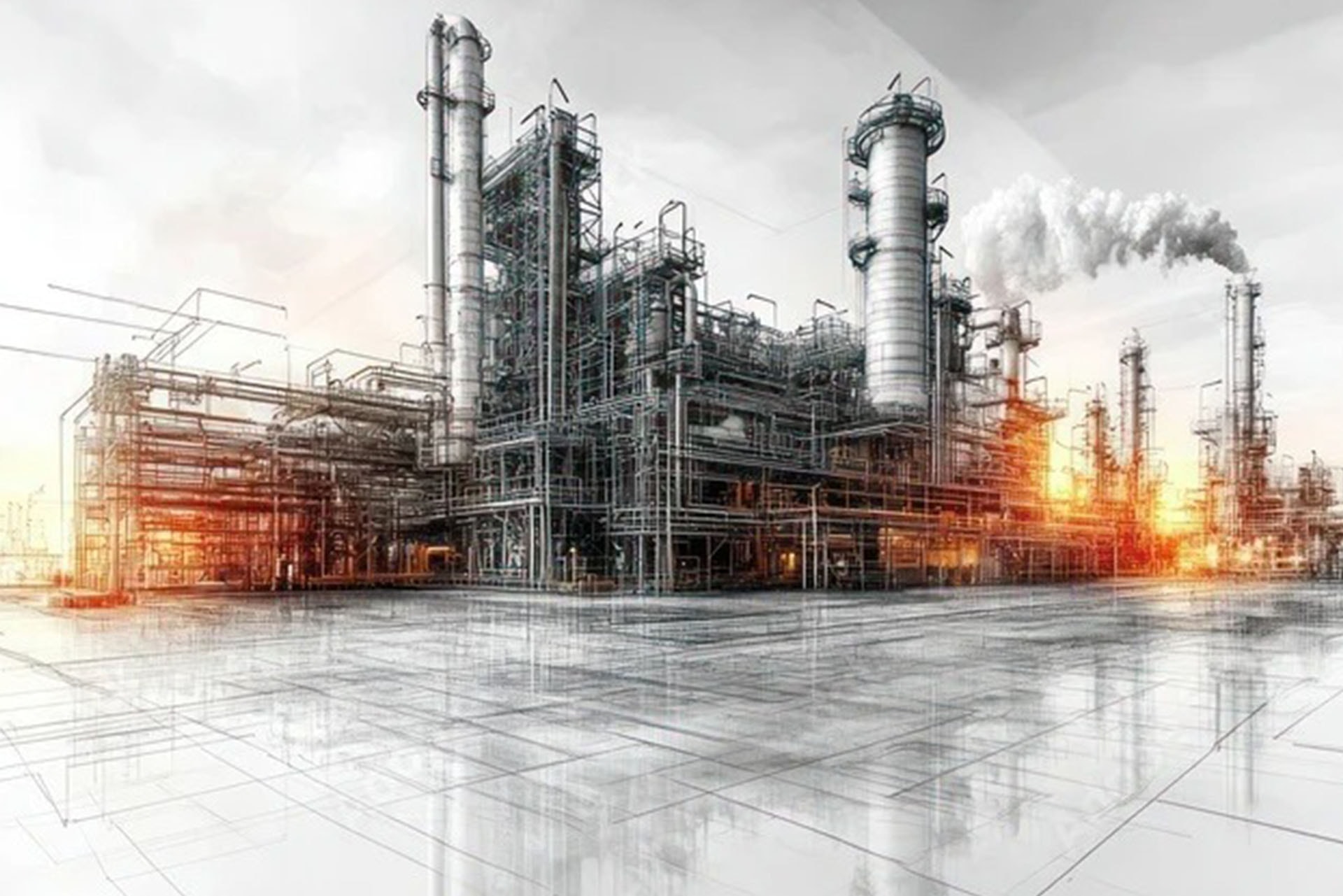
Para cualquier proceso de combustión continua de alta temperatura.
El principio físico-químico del Hydrobooster — catalizar la combustión de hidrocarburos con H₂ y enriquecerla con O₂ — se aplica a hornos, calderas, secadores y turbinas de combustión continua para apoyar la eficiencia energética. Lo que cambia es la ingeniería de aplicación, no el principio.
Si tiene un horno de combustión continua, podemos optimizarlo
Vidrio
Hornos de fusión de vidrio operan a 1.500–1.600°C con consumos térmicos específicos de 4.000–5.500 kcal/kg vidrio. La inyección de H₂ permite reducir consumo de gas natural, controlar NOx, mejorar la calidad óptica del vidrio, y reducir emisiones de SOx en hornos que usan fuel oil. Aplicable a vidrio plano, vidrio hueco (envases), vidrio especial y fibra de vidrio.
Cal
Hornos verticales y rotatorios de calcinación de caliza para producción de cal viva (CaO). Industria gemela del cemento desde el punto de vista de la combustión. Aplicación directa del Hydrobooster ALK con beneficios análogos: −kcal/kg cal, +AFR, ↑reactividad, ↓CO₂.
Cerámica
Hornos túnel y de rodillos para cerámica estructural (ladrillo, teja), cerámica sanitaria, baldosas, refractarios y porcelana técnica. La catálisis con H₂ mejora la curva de cocción, reduce consumo de gas natural y mejora la homogeneidad del producto.
Pulpa y papel
Calderas recuperadoras, calderas de biomasa, hornos de cal de ciclo Kraft, y secadores de papel. Aplicación: estabilización de llama en quemadores duales gas-biomasa, mejora de combustión de licor negro, y optimización térmica en secadores.
Generación eléctrica
Turbinas de gas industriales, calderas de potencia con gas natural, ciclos combinados, y plantas de cogeneración. La inyección de H₂ es una vía de transición hacia mezclas H₂/gas natural (hasta 30% en volumen sin modificación mayor) y eventualmente operación 100% H₂.
Refinación y petroquímica auxiliar
Calentadores de carga, hornos de refinería, calderas auxiliares de procesos petroquímicos. Aplicación: sustitución progresiva de combustibles fósiles en procesos térmicos auxiliares.
El mismo principio, resultados consistentes
- 5-15%
- ↓ consumo térmico
- 30%+
- ↓ NOx
- 0%
- modificación
Según proceso y combustible.
Combustión controlada con O₂.
Sin paro de planta mayor.
De la auditoría térmica al soporte continuo
Caracterización del proceso
Auditoría térmica, balance de energía, análisis de combustibles actuales.
Modelado CFD
Validación numérica del impacto de la inyección de H₂/O₂ antes de invertir en hardware.
Diseño del sistema
Dimensionamiento del electrolizador, puntos de inyección, sistemas auxiliares.
Ingeniería de seguridad
Análisis HAZOP específico para la industria del cliente, integración a su DCS.
Implementación y puesta en marcha
Instalación durante mantenimiento programado, certificación del personal.
Soporte continuo
Monitoreo remoto, mantenimiento preventivo, optimización iterativa.
Reciba la evaluación técnico-económica de su proceso térmico
Caracterización individual de su horno, caldera o turbina. No enviamos cotizaciones de catálogo.