
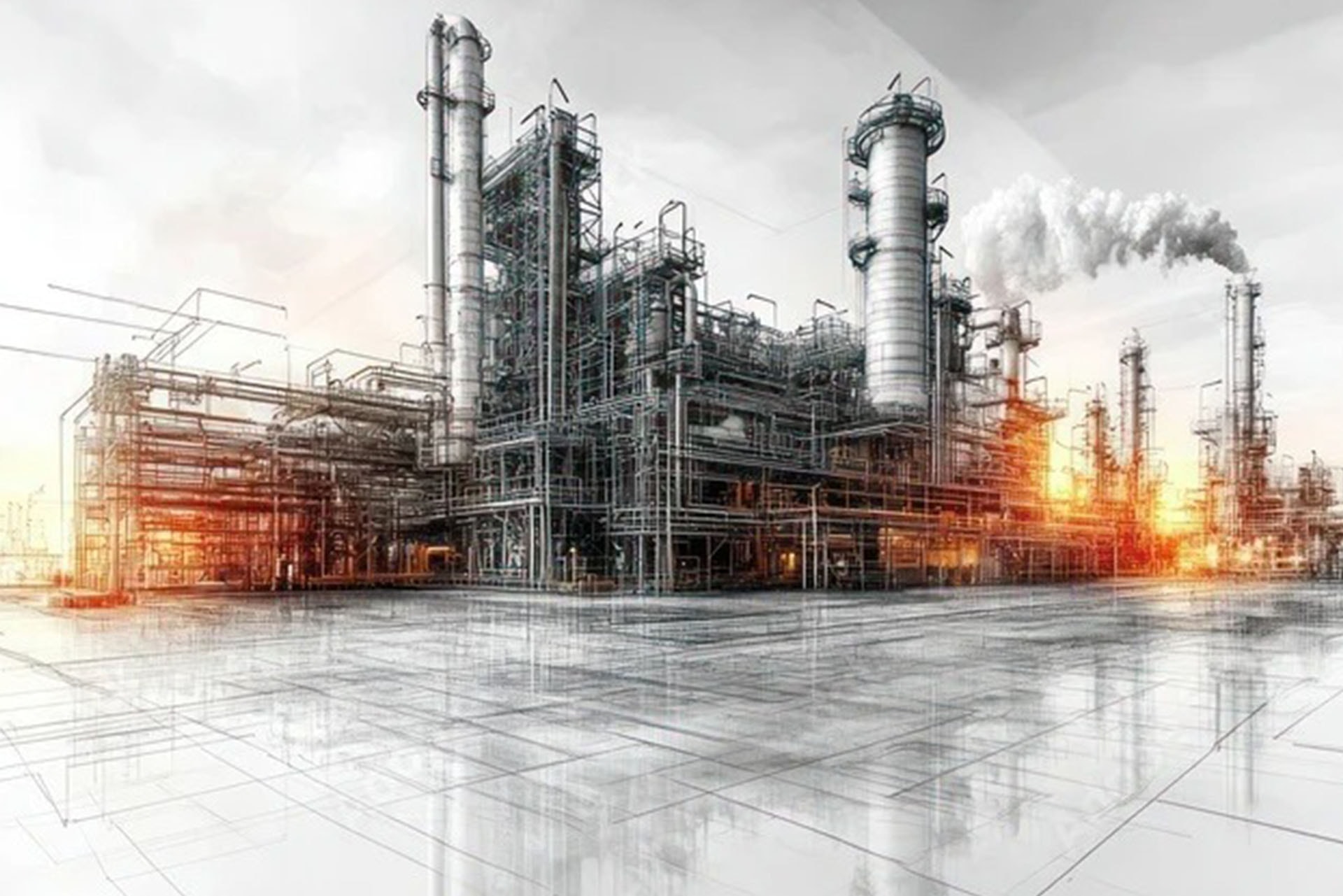
For any continuous combustion process at high temperature.
The Hydrobooster principle — catalyzing hydrocarbon combustion with H₂ and enriching it with O₂ — applies to furnaces, boilers, dryers and continuous-combustion turbines to support energy efficiency. What changes is the application engineering, not the principle.
If you have a continuous combustion furnace, we can optimize it
Glass
Glass melting furnaces operate at 1,500–1,600°C with specific thermal consumptions of 4,000–5,500 kcal/kg glass. H₂ injection reduces natural-gas consumption, controls NOx, improves the optical quality of the glass, and reduces SOx emissions in furnaces using fuel oil. Applicable to flat glass, hollow glass (containers), special glass and fiberglass.
Lime
Vertical and rotary limestone calcination kilns for quicklime production (CaO). A twin industry of cement from a combustion standpoint. Direct application of the Hydrobooster ALK with analogous benefits: −kcal/kg lime, +AFR, ↑reactivity, ↓CO₂.
Ceramics
Tunnel and roller kilns for structural ceramics (brick, tile), sanitaryware, tiles, refractories and technical porcelain. H₂ catalysis improves the firing curve, reduces natural-gas consumption and improves product homogeneity.
Pulp and paper
Recovery boilers, biomass boilers, Kraft-cycle lime kilns, and paper dryers. Application: flame stabilization in dual gas-biomass burners, improved black-liquor combustion, and thermal optimization in dryers.
Power generation
Industrial gas turbines, natural-gas power boilers, combined cycles, and cogeneration plants. H₂ injection is a transition path toward H₂/natural-gas blends (up to 30% by volume without major modification) and eventually 100% H₂ operation.
Refining and auxiliary petrochemicals
Charge heaters, refinery furnaces, auxiliary boilers for petrochemical processes. Application: progressive substitution of fossil fuels in auxiliary thermal processes.
The same principle, consistent results
- 5-15%
- ↓ thermal consumption
- 30%+
- ↓ NOx
- 0%
- modification
Depending on process and fuel.
Combustion controlled with O₂.
No major plant shutdown.
From the thermal audit to continuous support
Process characterization
Thermal audit, energy balance, analysis of current fuels.
CFD modeling
Numerical validation of the impact of H₂/O₂ injection before investing in hardware.
System design
Electrolyzer sizing, injection points, auxiliary systems.
Safety engineering
HAZOP analysis specific to the client's industry, integration into their DCS.
Implementation and commissioning
Installation during scheduled maintenance, personnel certification.
Continuous support
Remote monitoring, preventive maintenance, iterative optimization.
Receive the techno-economic assessment of your thermal process
Individual characterization of your furnace, boiler or turbine. We do not send catalog quotes.