
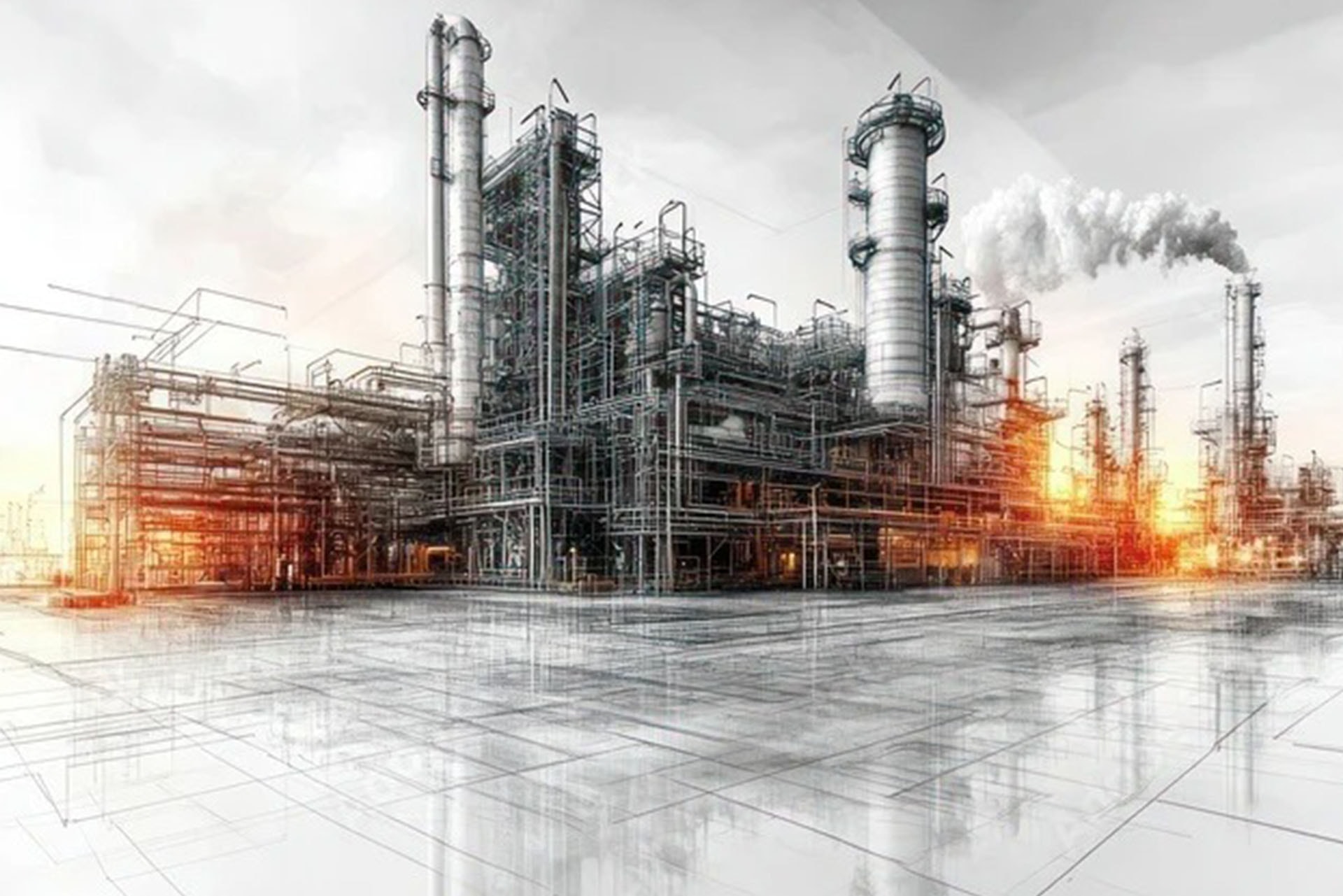
Engineering and consulting solutions for hydrogen and industrial decarbonization projects.
Beyond the electrolyzer, Knergy delivers the complete engineering that makes a green hydrogen project work technically, financially and operationally. Our team combines more than 40 years of heavy-industry experience (CEMEX, Lafarge, Holcim) with specialized expertise in green hydrogen production, storage, distribution and application.
Engineering and consulting, one accountable firm
Pillar 1 covers the design, analysis, optimization and control of industrial processes. Pillar 2 provides the strategic, financial and investment-committee support that ensures the project is executed.
Engineering
Design, analysis, optimization and control of industrial processes. We improve efficiency, productivity and quality through the use of combustion, hydrogen and oxygen technologies.
Consulting
Strategic advisory, techno-economic feasibility studies, due diligence, decarbonization plans and investment-committee support.
Design, analysis, optimization and process control
At Knergy we focus on the design, analysis, optimization and control of industrial processes. Our main objective is to improve the efficiency, productivity and quality of products and services through the use of technologies and, particularly, those related to the use of hydrogen.
Beyond the Hydrobooster
The Hydrobooster ALK is the most visible asset in our portfolio, but it is not the only one. Knergy offers complete pyroprocess, grinding and drying engineering — the technical knowledge accumulated by our founding partners over four decades of operation at CEMEX, Lafarge and Holcim.
The operational conclusion: we do not sell an isolated piece of equipment, we deliver engineering that frees up existing capacity before asking for a single peso of additional CAPEX.
Diagnose, optimize, size, execute
Phase 1 · Diagnose
Assessment, audit and process studies to identify bottlenecks and thermal-loss zones. Typical result: a roadmap with potential of +10% to +30% in available clinker production with no major investment.
Phase 2 · Optimize
We work on OPEX, maintenance and performance to maximize annual utilization and operational efficiency. Typical result: a −5% to −10% reduction in specific consumption.
Phase 3 · Size
We define the real production ceiling of every piece of pyroprocess equipment. Deliverable: a technical capacity roadmap with prioritized investment priorities.
Phase 4 · Execute
Techno-economic pre-feasibility and uprating projects with a robust business case. We support full execution: engineering → procurement → construction → commissioning → guarantee tests.
Cement: Ten subsystems of the calcination train
- 01
- Induced-draft (ID) fans
- 02
- Preheaters (4, 5 and 6 stages)
- 03
- High-efficiency cyclones
- 04
- Ducts between cyclones
- 05
- Calciners (in-line, separate-line, hybrid)
- 06
- Rotary kilns
- 07
- Main and calciner burners
- 08
- Clinker coolers (grey and white)
- 09
- Gas conditioning systems
- 10
- Gas dedusting systems
Cement: Grinding, separation and drying circuits
Raw materials
Grinding and homogenization circuits.
Cement
Vertical mills, ball mills and high-efficiency separators.
Solid fuels
Coal, petcoke and alternative fuels.
Dryers
Solid materials and fuels (RDF, biomass, sludge).
From turnkey equipment to CFD consulting
Turnkey equipment
Grey and white clinker calcination: ID fans, preheaters, cyclones, calciners, rotary kilns, burners, coolers and gas systems.
Fuel conversion
Conversion of plants that burn natural gas, fuel oil or coal toward petcoke and alternative fuels. Natural synergy with Hydrobooster ALK.
Heat recovery (WHR)
Audits and techno-economic studies for Waste Heat Recovery systems. Typically 5 to 8 MW per line (25%-30% of plant electricity consumption).
Power and energy audits
Comprehensive electrical diagnostics: power factor, power quality, transformer optimization, demand management.
Project consulting · Integrated EPC
Pre-feasibility → basic and detailed engineering → procurement → construction → commissioning → guarantee tests.
CFD consulting
Computational Fluid Dynamics modeling for flows, combustion and heat transfer. We validate modifications before investing in construction.
From standardized modules to multi-MW plants
Large-scale green hydrogen plants
Beyond standardized modules, design and delivery of multi-MW plants with integrated balance of plant, storage, compression, purification and auxiliary systems. Stacks from 25 kW to 15 MW per unit.
Integration with renewable energy
H₂ production systems coupled to renewable generation (solar, wind, mini-hydro) with energy storage and intelligent demand management.
Process engineering applied to heavy industry
Process engineering applied to pyroprocesses, grinding and drying systems, boilers, steel furnaces, glass and ceramic furnaces. The methodology is the same one developed by our founding partners over four decades: rigorous thermal balance, CFD modeling, experimental validation, iterative optimization.
Conceptual engineering
The initial step of any engineering project: defining the final product. Objective: to identify the technical and economic feasibility of the project and chart the path for developing basic and detailed engineering.
Definition of the final product
Scope, capacity, technical and operational specifications.
Technical feasibility analysis
Compatibility with existing infrastructure, auxiliary-service requirements, spaces.
Economic feasibility analysis
Preliminary estimate of CAPEX, OPEX and return on investment.
Technology selection
Recommendation of the optimal technology (alkaline vs PEM, capacities, configuration).
Project roadmap
Definition of phases, milestones, critical dependencies and a high-level schedule.
Basic and detailed engineering
Once the conceptual engineering is approved, Knergy develops the basic engineering (PFDs, preliminary P&IDs, specifications of critical equipment, general layout) and the detailed engineering (final P&IDs, complete specifications, isometric drawings, bills of materials, instrumentation and control specifications).
Optimization of existing processes
Technical audits for operating plants: identification of bottlenecks, thermal-loss zones, optimization opportunities. Typical result: a roadmap with potential of +10% to +30% in available production with no major investment, or −5% to −10% in specific consumption.
Designed for the customer's NETWORK, not as islands
Integrating the hydrogen system into the customer's plant control is one of the critical points of any project. Knergy designs, manufactures and implements control cabinets specifically conceived for operation on the end customer's NETWORK — not as isolated systems that require a dedicated operator.
Cabinet engineering
Electrical, logical and functional design of the cabinet with a focus on implementing the system on the end customer's NETWORK. Specification of PLCs, communication drivers, industrial protocols (Modbus, Profinet, EtherCAT, OPC-UA), redundancies, functional safety systems.
Electrical and single-line diagrams
Documented electrical design for implementation on the end customer's NETWORK.
Control logic diagrams
Operating sequences and the cabinet's functional logic.
Communications specification
Integration into the customer's DCS/SCADA with Modbus, Profinet, EtherCAT, OPC-UA protocols.
Physical cabinet design
Layout, ventilation, IP rating, accessibility.
Cabinet manufacturing
Manufacturing under industrial standards with complete FAT (Factory Acceptance Test) testing before shipment. Quality control at every stage: component installation, wiring, electrical tests, control-logic simulation, communication tests.
Workshop construction
Under the applicable IEC/UL standard, with quality control at every stage.
FAT testing
Factory Acceptance Test with full system simulation before shipment.
As-built documentation
Operating manuals and documentation of the final construction.
Cabinet implementation on the network
On-site installation and commissioning of the cabinet includes real integration into the customer's DCS/SCADA, tag configuration, signal mapping, SAT (Site Acceptance Test) testing, and certification of plant personnel.
Physical installation and wiring
On-site assembly and wiring of the cabinet.
Integration into the control network
Real integration into the customer's existing DCS/SCADA/PLC.
HMI configuration
Operating dashboards, tag configuration and signal mapping.
SAT testing and commissioning
Site Acceptance Test and system start-up.
Personnel training
Certification of plant operating and maintenance personnel.
40%–60% of CAPEX lives outside the stack
The Balance of Plant is the set of all auxiliary systems surrounding the electrolyzer that enable its safe, efficient and reliable operation. In a green hydrogen project, the BOP typically represents between 40% and 60% of total CAPEX — more than the stack itself. Its correct design is what distinguishes a successful project from one that operates below specifications.
BOP components in hydrogen systems
Water treatment system
Feed water of appropriate quality (ultrapure for PEM, treated for alkaline), blowdown management.
Electrolyte and recirculation (alkaline)
KOH handling, recirculation pumps, heat exchangers, regeneration systems.
Gas separation and purification
Liquid-gas separators, dryers, deoxidation systems, filters.
Cooling system
Chillers, cooling towers, heat-recovery systems.
H₂ compression and storage
Multi-stage compressors, medium- and high-pressure storage tanks, safety valves.
Oxygen system
Capture, purification, storage or controlled venting of the by-product O₂.
Power rectification
Industrial AC/DC rectifiers, transformers, protection systems.
Control and instrumentation
DCS, PLCs, transmitters, control valves, SIS systems.
Venting and purge system
Safe vent lines, flame arrestors, nitrogen inerting systems.
General electrical system
Distribution, switchboards, UPS, grounding and lightning-protection systems.
Knergy BOP analysis methodology
Requirements definition
H₂ demand profile, operating conditions, site constraints.
Integrated sizing
Calculation of each subsystem's capacities with appropriate safety factors.
Energy-efficiency analysis
Loss optimization, heat recovery, power factor.
Reliability analysis
Identification of critical equipment, definition of redundancies, maintenance plan.
Cost analysis
Detailed CAPEX and OPEX for each subsystem.
Deliverable documentation
PFDs, P&IDs, equipment lists, specifications, drawings.
Hydrogen demands its own HAZOP, not a generic one
Hydrogen has very specific safety characteristics that distinguish it from any other combustible gas: extremely wide explosivity limits (4%–75% in air), very low minimum ignition energy, high flame speed, high diffusivity, metal embrittlement. A generic chemical-plant HAZOP is NOT sufficient for a hydrogen facility — a HAZOP specifically designed for H₂ risks is required.
HAZOP specific to hydrogen
Knergy performs exhaustive HAZOP analyses designed specifically for hydrogen production, storage, distribution and use systems. The methodology follows the IEC 61882 standard with H₂-specific guidance derived from international operating experience (ISO 22734, NFPA 2, EIGA documents).
Scope of a Knergy hydrogen HAZOP
Nodes analyzed
Water and electricity supply, electrolysis, gas separation, drying and purification, compression, storage, distribution, final point of use.
Specific guide words
No/no flow, more/less, reverse, as well as, part of, other than, applied to critical parameters (pressure, temperature, flow, composition, level).
H₂-specific failure scenarios
Permeation through membranes/diaphragms, H₂/O₂ cross-contamination, material embrittlement, static-electricity ignition, deflagration vs detonation.
Identification of safeguards
Independent protection layers (IPLs), safety instrumented systems (SIS), flame arrestors, relief valves, H₂ detection systems.
Residual-risk evaluation
Risk matrix with probability and severity, prioritized mitigation recommendations.
Integration with SIL
Assignment of safety integrity levels (SIL2/SIL3) to instrumented functions in accordance with IEC 61511.
Industry-specific HAZOP
When the H₂ system is integrated into a complex industrial process, the HAZOP must extend to the customer's process. Knergy performs cement HAZOPs (interaction with the pyroprocess), steel HAZOPs (interaction with blast furnaces, DRI, reheating furnaces) and other thermal processes, not just HAZOPs of the isolated electrolyzer.
HAZOP deliverables
- HAZOP executive report
- Summary for C-level
- Detailed HAZOP table
- Nodes, guide words, causes, consequences, safeguards and recommendations
- Risk matrix
- Action prioritization
- SIS functions
- SIL specification and assignment
- Action plan
- Owners and dates
- Supporting documentation
- For regulatory and insurance audits
From the technical project to the investment decision
Engineering solves the how. Consulting solves whether to invest, when to invest and how to finance it. Knergy delivers both under a single point of technical and contractual accountability.
Strategic, financial and investment advisory
We provide specialized professional advisory services and solutions to companies and organizations across various areas, with the goal of improving their performance, solving specific problems or seizing growth opportunities. Our consulting is oriented toward three types of clients: heavy industries evaluating investment in green hydrogen, funds and investors that require technical due diligence, and government entities that design industrial-decarbonization policies.
The best solutions according to market, technology and regulation
Personalized advisory based on our comprehensive knowledge of the renewable hydrogen sector and its industrial applications. We help our clients choose the best solutions by combining market analysis, available technology, trends and regulatory aspects.
Decarbonization strategy
Multi-year roadmap to meet Net Zero / Science Based Targets objectives.
Market analysis and benchmarking
Comparison against competitors on efficiency, emissions and costs.
Technology selection
Independent evaluation of alternative technologies (alkaline vs PEM vs AEM vs SOEC).
Regulatory analysis
Navigation of carbon regulations, tax credits (IRA, CBAM, ETS), local incentives.
Differentiated, flexible and customized solutions
We help companies study the technical and economic feasibility of the hydrogen projects to be implemented, offering differentiated, flexible and customized solutions for each case. It includes:
Demand and supply analysis
Energy demand and supply of the project.
Technical system modeling
Complete system: electrolysis + BOP + integration.
CAPEX estimation
Class 3 or class 4 depending on the project phase.
Financial modeling
ROI, IRR, NPV, LCOH (Levelized Cost of Hydrogen).
Sensitivity analysis
To energy prices, fuels, CO₂ credits.
Risk and mitigation analysis
Identification and mitigation of project risks.
Bankable documentation and independent due diligence
Specialists in drafting Project Finance with investment-metric calculations for projects related to the hydrogen chain. We help large consultancies, banking organizations and investment funds carry out and guide technical and financial Due Diligence for the sector.
Technical Due Diligence
Independent validation of technical assumptions, capacities, efficiencies, service life.
Financial Due Diligence
Validation of CAPEX/OPEX, financial models, market assumptions.
Project Finance support
Bankable documentation, term sheets, guarantee analysis.
Investor support
Opportunity assessment, valuation of companies/projects.
From renewable energy to the end consumer
We shape projects that span from renewable energy production to the inclusion of end consumers of renewable hydrogen and its derivatives. We advise on the analysis of the different ways of producing, transporting and storing hydrogen at the local and international level.
Production
Electrolysis (alkaline/PEM), reforming with capture, biomass.
Storage
Compressed gas, cryogenic liquid, chemical vectors (ammonia, methanol, LOHC).
Transport
Pipeline, road transport, maritime, chemical derivatives.
Application
Heavy industry, mobility, power generation, chemicals.
From forklifts to heavy-tonnage trucks
We help decarbonize internal and external logistics fleets: from forklifts and quarry vehicles to heavy-tonnage trucks. Our models let us obtain information on which type of vehicle and which type of refueling station best meets the customer's needs based on their daily operation.
Identification, application and processing of incentives
Advisory on the identification, application and processing of public and private incentives available for green hydrogen projects: tax credits (Inflation Reduction Act in USA, SENER programs in México, NextGenerationEU funds in Europe), voluntary and regulated carbon credits, development-bank financing.
Training programs for technical and management teams
Training programs designed for technical and management teams of industrial plants: green hydrogen fundamentals, safe operation of electrolysis systems, preventive and corrective maintenance, integration into production processes. On-site and online training.
Executive summary of services
“A single firm for the entire project cycle: engineering + technology + execution + support. We reduce the integration risk among multiple suppliers and deliver a single point of technical and contractual accountability.”
— Knergy integrated service model
Let's talk about the complete engineering of your hydrogen project
Technical diagnosis, economic feasibility and due diligence with a single point of accountability. We do not send catalog proposals.